

In today’s rapidly evolving economy, businesses are constantly seeking smarter ways to grow and boost their business. One such time-tested yet modern solution is Barter Trading. Businesses today are using structured barter exchanges to conserve cash, move surplus inventory, and acquire valuable services without traditional cash payments.
This guide explains what B2B Barter is, how it works in the modern economy, and why Indian businesses are increasingly adopting barter exchanges as a strategic growth tool.
What is Barter Trade?
Barter Trade is a system of exchange in which businesses can acquire goods or services they need in exchange for goods and services they have. Instead of paying cash to obtain what they need, businesses trade in their surplus inventory or unused capacity, thus conserving cash in the business.
In traditional barter, two parties exchanged goods or services directly. In today’s organized barter ecosystem, a barter exchange platform such as OneUpTrade, acts as a facilitator. Instead of needing to find a direct one-to-one trade partner, businesses earn barter credits when another member purchases their goods or services. These credits can then be used to acquire a wide range of products and services from other members within the network.
This organized system makes barter trading more flexible, efficient, and scalable, allowing businesses to conserve cash while maximizing the value of their existing resources
How Does a Modern Barter Exchange Work?

A barter exchange simplifies trading by eliminating the need for a direct one-to-one swap. Here’s how it typically works:
This structured system makes barter trade practical for modern Indian businesses of all sizes.
Why Barter Trade is Gaining Popularity in India
Due to a volatile market environment, Indian businesses at times, may experience cash flow constraints. Increasing operational costs and delayed payments can make it difficult for companies to rely solely on cash transactions for growth. Trading their available inventory and utilising their spare capacity on barter offers a practical alternative, enabling businesses to preserve liquidity while still acquiring essential products, services, and marketing opportunities.
Today, industries such as advertising, hospitality, manufacturing, entertainment, and real estate are increasingly using barter exchanges to reduce expenses, utilize surplus capacity, and improve overall business efficiency.
Advantages of Barter Trade for Businesses
Understanding the advantages of barter trade can help businesses decide whether it fits their strategy.
Conserves Cash Flow
Barter allows businesses to acquire products or services without spending cash, keeping liquidity intact for critical expenses.
Utilizes Idle Inventory or Spare Capacity
Unused stock, empty hotel rooms, unsold ad space, or unutilized service hours can be converted into value rather than sitting idle
Reduces Marketing and Operational Costs
Many companies use barter trading to obtain advertising, branding services, corporate gifting, office supplies, or travel, helping significantly reduce business expenses.
Expands Business Networks
Joining a barter exchange platform connects businesses with a wider network of potential clients, suppliers, and strategic partners, creating new opportunities for collaboration and growth.
Supports Sustainable Business Practices
By maximizing the use of existing resources, barter trading encourages more efficient and sustainable business operations.
Barter Trading vs Traditional Cash Transactions
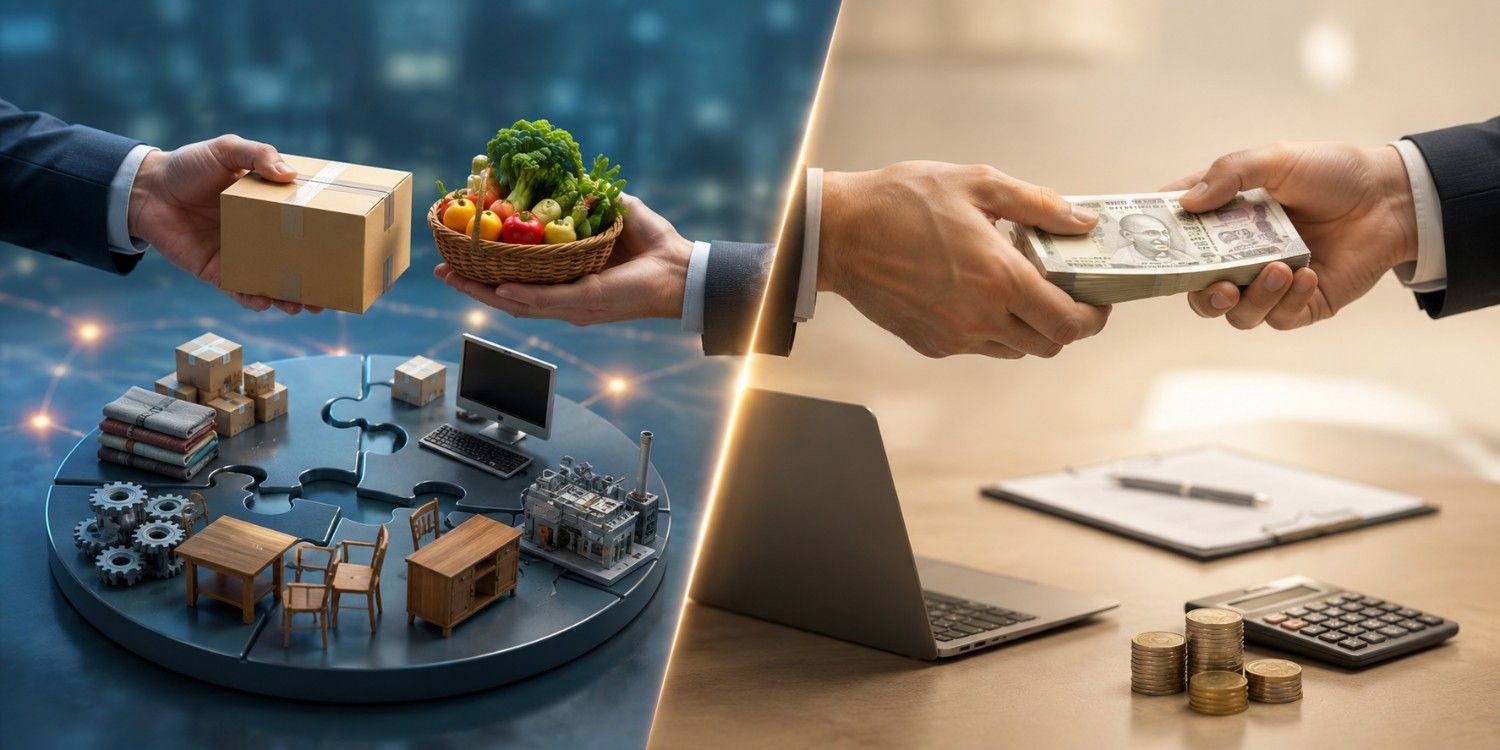
While cash transactions remain essential for day-to-day business operations, barter trading complements rather than replaces them. Cash is typically used for fixed expenses such as salaries, taxes, and statutory payments. In contrast, barter exchanges are most effective for variable business costs, including marketing, advertising, travel, professional services, and inventory movement.
By participating in a barter exchange network, businesses can strategically balance cash spending with barter transactions. This approach helps preserve liquidity, optimize resources, and build a more flexible and resilient financial structure.
| Barter | Cash | |
|---|---|---|
| Payment Method | Exchange of goods or services using barter credits | Payment made using money |
| Cash Flow Impact | Preserves business cash flow | Requires immediate cash outflow |
| Best Used For | Marketing, travel, inventory movement, professional services | Salaries, taxes, rent, utilities |
| Flexibility | Allows businesses to utilize surplus inventory or unused capacity | Limited to available cash resources |
| Network Benefits | Connects businesses within a barter exchange network | Typically involves a direct buyer–seller transaction |
Legal and Tax Considerations in India
Barter trade in India is legal and recognized under tax regulations. Transactions conducted through a barter exchange are taxable and must be recorded at fair market value. Businesses are required to maintain proper documentation and comply with GST and income tax norms.
Professional barter exchanges usually assist members with transparent reporting, ensuring compliance and peace of mind.
Choosing the Best Barter Trade Company
Selecting the best barter trade company is crucial for a successful barter experience. Businesses should evaluate:
- ✓
Size and diversity of the exchange network - ✓
Transparency in trade credit valuation - ✓
Industry relevance of members - ✓
Support services and account management - ✓
Compliance and documentation assistance
A reliable barter exchange like OneUpTrade ensures fair deals, smooth transactions, and long-term value creation.
Who Should Consider Barter Trade?
Barter trade is ideal for:
- ✓
Businesses looking to reduce cash expenses - ✓
Businesses with surplus inventory or unused capacity - ✓
Companies seeking cost-effective marketing and branding - ✓
Organizations aiming to expand networks without high upfront costs
If your business fits any of these categories, barter trade can be a strategic advantage.
Examples of Barter in Modern Business
| Industry | Example Barter Use |
|---|---|
| Hotels | Trade empty rooms for advertising |
| Media | Exchange ad space for services or products |
| Restaurants | Trade dining vouchers for services |
| Manufacturers | Trade excess inventory for advertising |
Conclusion
In today’s competitive business environment, barter trading has evolved into a practical and strategic tool for modern companies. By enabling businesses to exchange goods or services without immediate cash payments, barter helps preserve liquidity, unlock value from surplus inventory or unused capacity, and improve overall operational efficiency.
As more Indian businesses explore alternative ways to optimize costs and expand their networks, structured barter exchanges are becoming an increasingly valuable solution.
For companies interested in exploring organized barter opportunities at scale,
One Up Trade provides a platform that helps businesses convert excess resources into meaningful growth opportunities.
